Low heat. Low pressure.
Operating at 70–90°C, our depolymerization process uses much lower temperatures than traditional heat-and-mold recycling and extrusion, reducing energy consumption.


*Observed in tests with real-life feedstocks under specific conditions

Operating at 70–90°C, our depolymerization process uses much lower temperatures than traditional heat-and-mold recycling and extrusion, reducing energy consumption.
Denovia’s core depolymerization process breaks down PET plastics within minutes. Under certain conditions, flash depolymerization is observed.
Many chemical outputs are reused in the next processing cycle, creating a circular and sustainable process with minimal waste.
Our tests with real-life plastic waste feedstocks achieved TPA purity above 99.5%* (depending on conditions), enabling high-quality downstream applications.
Our depolymerization technology works with textiles as well as mixed and contaminated waste that traditional recycling struggles to handle.
Denovia’s technology transforms plastic waste into saleable plastic raw materials and industrial chemicals, rewriting the economics of recycling.
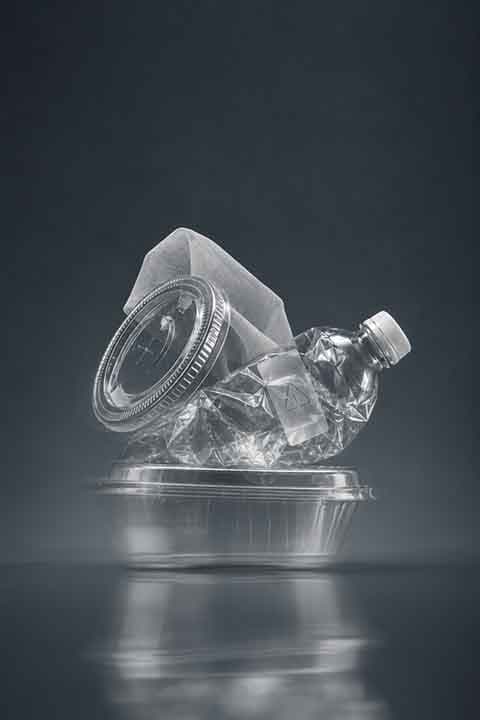
Some of the many types of PET waste our technology can depolymerize.


Denovia’s process offers two routes, each yielding different products.The two routes also produce other industrial chemicals that can be resold and used in other industrial manufacturing processes.(Different output in each)


Relatively low heat and pressure
Handles mixed and contaminated PET waste
Advanced chemical process
High-quality output for making new plastics
Can be continuously recycled

High temperatures to melt and reshape plastics
Typically requires well-sorted inputs for high-quality output
Primarily mechanical processing
Material quality degrades with repeated processing
Quality loss limits the number of recycling cycles


